When living in 28 to 50 square metres, the conventional impulse is to buy smaller pieces of freestanding furniture: a narrow chest here, a mini bookcase there, a small plastic cart beside the sofa. In practice, half a dozen small freestanding units break up the skirting line and make a room feel like a furniture warehouse. True compact-space relief comes from consolidating storage onto one architectural plane while keeping the rest of the floor boundary visibly clear.
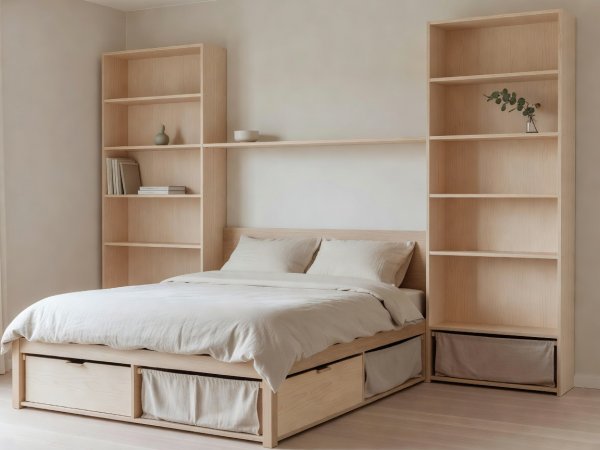
In a small bedroom, placing freestanding bedside tables and a chest of drawers leaves barely 45 cm to squeeze past the mattress corner. Instead, pull the bed 22 cm forward of the wall and build a full-width birch shelf bridge behind and above the headboard. A recessed niche at mattress height holds reading glasses, water and a lamp without any floor legs, while upper cupboards store seasonal duvets and suitcases.
Volume Recovery · 0–22 cm Floor Zone
Dust-Sealed Under-Bed Drawers
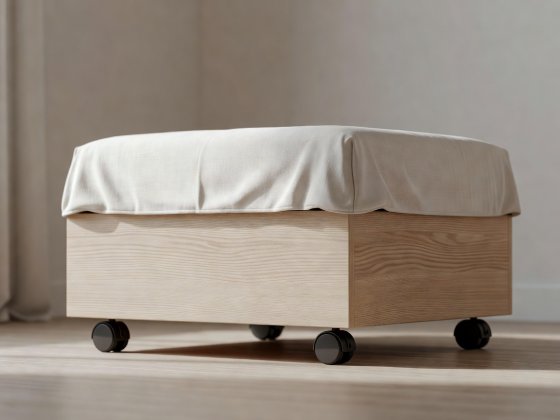
The footprint beneath a double bed equals nearly three square metres of prime floor area—larger than two full-height wardrobes. Rather than shoving loose plastic bags underneath where dust gathers, use four tailored wooden crates on unidirectional rubber rollers fitted with breathable buttoned flax-linen dust covers.
Volume Recovery · The Backsplash Strip
The 50 cm Backsplash Gap
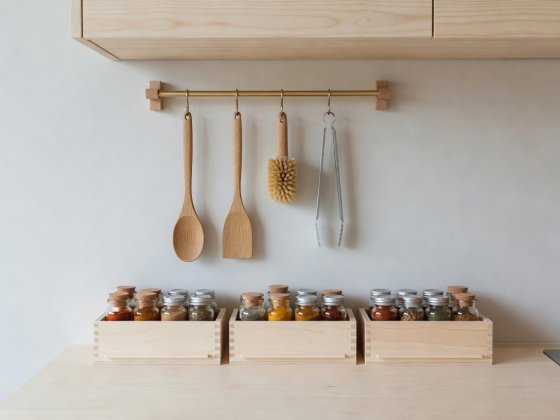
In galley kitchens, worktops get buried under coffee grinders, oil bottles and cutting boards. Mounting a 12 cm deep rail-and-crate system halfway between the counter and the upper cabinets clears the prep surface completely while keeping daily salt, olive oil and wooden spoons within a single hand movement of the hob.
Colour and Light Discipline in Tight Quarters
When a single storage wall holds a large volume of household possessions, visual contrast becomes as important as physical depth. Painting or choosing storage frames that closely match the wall tone—such as warm chalk-white steel uprights against an off-white plaster wall, paired with pale natural birch or ash crates—reduces high-contrast outlines. Reserve strong colour accents (like signal red or deep terracotta) for small, intentional touchpoints: a kettle, an entryway tray or a reading lamp switch.
Cookies on this site Some cookies are needed for the site to work. Others help us understand how it is used. You can change your choice later. More about cookies